

Understand Back Pain and Sciatica
Back pain is common, but the experience is rarely the same for two people. Sciatica describes pain or altered feeling that follows a nerve pathway from the low back into the buttock or leg often caused by nerve irritation or compression. At Advanced Kinetics Physical Therapy + Sports Performance, we provide relief for back pain and sciatica in McLean, VA and Falls Church, VA by restoring function and control so you can return to everyday life and sport with confidence, not just short-term symptom relief.
Symptoms to Look For
Back pain and sciatica can present in different ways. Common signs include:
- Localized low-back pain, stiffness, or aching
- Pain radiating into the buttock, thigh, calf, or foot
- Numbness, tingling, or altered sensation in the leg or foot
- Sharp or shooting pain with certain positions or movements
- Reduced tolerance for sitting, standing, walking, or bending
- Difficulty with lifting, twisting, or returning to sport
If leg symptoms dominate, or if changes in sensation follow a consistent pattern, that often suggests nerve involvement and benefits from a targeted clinical approach.
Common Causes
Back and nerve-related symptoms can result from multiple factors, including:
- Disc irritation or herniation pressing on a nerve root
- Spinal degenerative changes or facet joint irritation, degenerative disc disease (DDD)
- Poor load tolerance from weakness or control deficits around the hips and core
- Prolonged sitting, repetitive lifting, or sudden overload
- Structural instability or prior surgery that altered mechanics
- Nerve sensitivity from inflammation, scar tissue, or mobility restrictions
Often several factors combine to create ongoing pain. Our goal is to identify which factors are driving your symptoms and address them in a clear, prioritized plan.
How Physical Therapy at AKPT Helps
We blend clinical precision with performance-based progression to restore reliable function and reduce symptoms. Our approach includes:
- Comprehensive functional evaluation: We assess pain, strength, flexibility, posture, and how your body performs with real tasks (walking, lifting, sitting, sport demands).
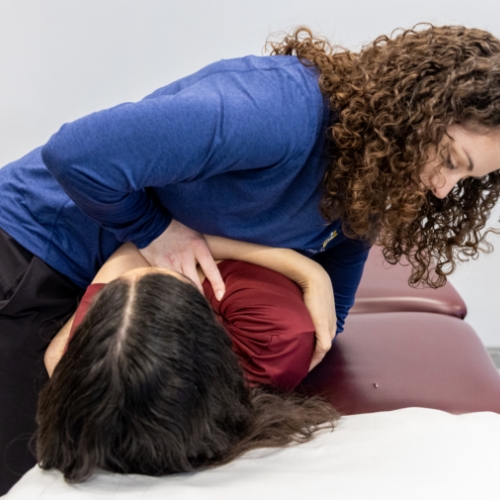
- Targeted manual therapy: Hands-on treatment to restore joint motion and soft-tissue flexibility when needed.
- Nerve mobility and desensitization techniques: Specific strategies to improve how nerves glide and reduce radiating symptoms.
- Progressive strength and load management: Staged programs to rebuild core and hip capacity so the spine tolerates daily and sport loads.
- Motor control and conditioning: Training to improve timing, coordination, and task-specific resilience.
- Activity-specific return plans: Programs that prepare you for work, sport, or daily tasks with measurable benchmarks.
- Education and self-management: Practical strategies to reduce flare-ups, manage symptoms, and maintain gains at home.
We track outcomes and adjust the plan so improvements are measurable and relevant to your goals.
Why Early Physical Therapy Is Often a Better First Step Than Surgery
Starting conservative care early can change the whole recovery path:
- Less invasive: Physical therapy treats underlying functional contributors without the risks of surgery.
- Addresses root causes: Therapy corrects strength, control, and loading issues that often lead to recurrence, which surgery may not correct.
- Faster return to activity: Many patients experience meaningful symptom relief and improved function within weeks when therapy is started early.
- Cost-effective and lower risk: Conservatively restoring capacity is typically less costly and has fewer complications than surgical intervention.
- Empowers patients: PT teaches durable strategies and progressions so you manage symptoms and reduce the chance of repeat problems.
That said, surgery may be necessary in certain cases (e.g., progressive neurologic weakness, significant nerve compression, or cauda equina syndrome). We evaluate each patient carefully and work with surgeons and referring clinicians when surgery is the best option.
When to Seek Immediate Care
Seek urgent medical attention or go to the emergency department if you experience:
- Sudden, severe weakness in a leg
- Loss of bowel or bladder control or numbness in the groin area
- Rapidly worsening neurological symptoms
What to Expect at Your First Visit
Your therapist will:
- Review your history and symptoms
- Perform an individualized evaluation of pain, strength, flexibility, and task-specific performance
- Explain the primary drivers of your symptoms and a clear, staged plan of care
- Begin appropriate hands-on treatment and provide a practical home program with measurable next steps
Ready to Start a Recovery That Lasts?
Questions Patients as about Back Pain and Sciatica
How do I know if my back pain is actually sciatica?
Can physical therapy really help sciatica without surgery
How long does it take to see improvement in back pain or sciatica?