
A Modern Clinical Approach to Muscular Tension and Relief
Dry needling is a precise, evidence-based technique used to target myofascial trigger points and muscle dysfunction that contribute to pain, restricted range of motion, and reduced performance. At Advanced Kinetics Physical Therapy + Sports Performance, our objective is clear. We aim to eliminate trigger points, restore muscle function, and create measurable improvements in pain levels and strength. The goal is to help you return to daily routines, work, or training with greater efficiency and reliability.
We integrate dry needling in McLean, VA and Falls Church, VA within comprehensive physical therapy plans, combining it with manual therapy, progressive strengthening, motor control retraining, and activity-specific conditioning for durable gains that extend beyond the session.
When People Seek Dry Needling
Patients often pursue dry needling when persistent muscle tightness or active trigger points begin to limit function. Pain may affect focus, sleep, training, or daily performance.
Common presentations include localized muscle knots that create deep aching. Some trigger points refer pain into nearby areas. Others contribute to weakness or poor motor control that does not improve with rest or stretching.
Symptoms may develop from overuse, acute injury, postural strain, or long-standing movement patterns. When these factors reduce tissue tolerance, progress can stall.
Dry needling targets dysfunctional muscle tissue directly. It helps release trigger points, reduce pain, and improve neuromuscular activation. This creates the foundation for structured, progressive rehabilitation and measurable gains.
What Dry Needling Looks Like in Real Life
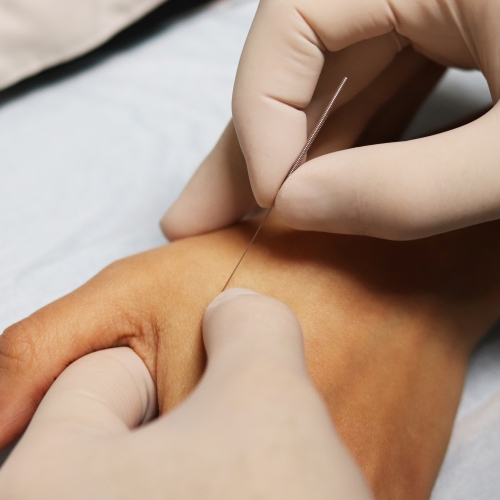
Dry needling at Advanced Kinetics Physical Therapy + Sports Performance is individualized, evidence-informed, and always part of an active care model. Trained and certified therapists use thin, solid filiform needles inserted directly into myofascial trigger points to elicit a local twitch response, promote physiological changes such as improved blood flow and facilitate immediate tissue relaxation. It is never isolated; we follow with functional progression to reinforce results.
Typical session elements include:
- Comprehensive assessment: objective evaluation of trigger points, muscle length, strength, movement patterns, and kinetic chain interactions to confirm indications and guide treatment.
- Targeted dry needling: precise insertion into active or latent trigger points in muscles or fascia to achieve therapeutic twitch response and release.
- Post-needling interventions: manual therapy, joint mobilizations, or soft-tissue techniques to optimize mobility and address any temporary soreness.
- Progressive strengthening and motor control: staged exercises to rebuild endurance, stability, and coordination around treated tissues.
- Functional conditioning: drills tailored to real-world demands, including work tasks, sport-specific movements, or daily activities for direct transfer of improvements.
- Structured home program: progressive, trackable exercises and self-management strategies with milestones to sustain gains and prevent recurrence.
We monitor objective outcomes, including pain scales, range of motion, strength measures, and functional performance, adjusting the plan collaboratively for consistent, measurable progress.
When Dry Needling Becomes Helpful
Dry needling proves effective when myofascial restrictions or trigger points (muscle knots) begin constraining performance or daily function. Common triggers include:
- Persistent muscle tightness limiting range or causing referred symptoms
- Active trigger points driving chronic or recurrent pain patterns
- Reduced strength or endurance following injury, overuse, or prolonged postures
- Difficulty returning to training, work, or sport due to localized dysfunction
- Pain or guarding that persists despite passive modalities
- Recurrent flare-ups in high-demand or repetitive-stress muscles
- Decreased confidence in movement linked to unresolved myofascial issues
Dry needling delivers the best results when directed by a thorough evaluation and integrated into active, performance-oriented rehabilitation rather than used alone.
Common Reasons People Seek Dry Needling at Advanced Kinetics Physical Therapy + Sports Performance
- Neck and upper trapezius tightness with tension headache referral
- Shoulder or rotator cuff tightness restricting overhead function or lifting
- Low back, gluteal, or piriformis contributing to sciatica-like symptoms
- Hip flexor or IT band restrictions impacting walking, running, or agility
- Calf, achilles, or plantar fascia issues affecting balance and endurance
- Forearm or elbow tightness from repetitive occupational or sport tasks
- Post-injury muscle guarding or compensatory weakness
- Chronic tension that reduces overall performance, recovery, or confidence
How Dry Needling at Advanced Kinetics Physical Therapy + Sports Performance Supports Measurable Progress
Grounded in our core values of Action, Knowledge, Passion, and Teamwork, we combine dry needling with performance-focused physical therapy to rebuild tissue tolerance and minimize re-aggravation risk:
- Accurate trigger point identification through palpation, functional testing, and kinetic chain analysis
- Immediate myofascial release to lower pain barriers and improve mobility
- Progressive load management following needling to safely enhance strength and endurance
- Neuromuscular retraining to refine coordination, timing, and movement quality
- Activity-specific integration to prepare tissues for real-life, sport, or work demands
- Education on self-care, ergonomics, and prevention to empower long-term control
- Ongoing tracking of pain, function, and benchmarks with collaborative plan adjustments
Active participation, driven by Passion and Teamwork, yields faster, more sustainable outcomes.
A Thoughtful, Performance-Focused Approach
At Advanced Kinetics Physical Therapy + Sports Performance in McLean, VA and Falls Church, VA, dry needling is collaborative, goal-oriented, and rooted in clinical excellence. We connect this technique to your unique demands, whether desk-based work, manual labor, or athletic pursuits, so improvements are practical, evidence-based, and lasting. Clear communication, objective progression, and a commitment to continuous learning guide every step.
Take a Confident Step Forward
If trigger points or muscle dysfunction are restricting your comfort, function, or activity level, dry needling as part of a structured physical therapy plan may provide the targeted intervention you need.
Questions Patients Often Ask About Dry Needling
Is dry needling safe for all types of muscle pain?
How does dry needling improve my strength?
Will I be sore after a dry needling session?